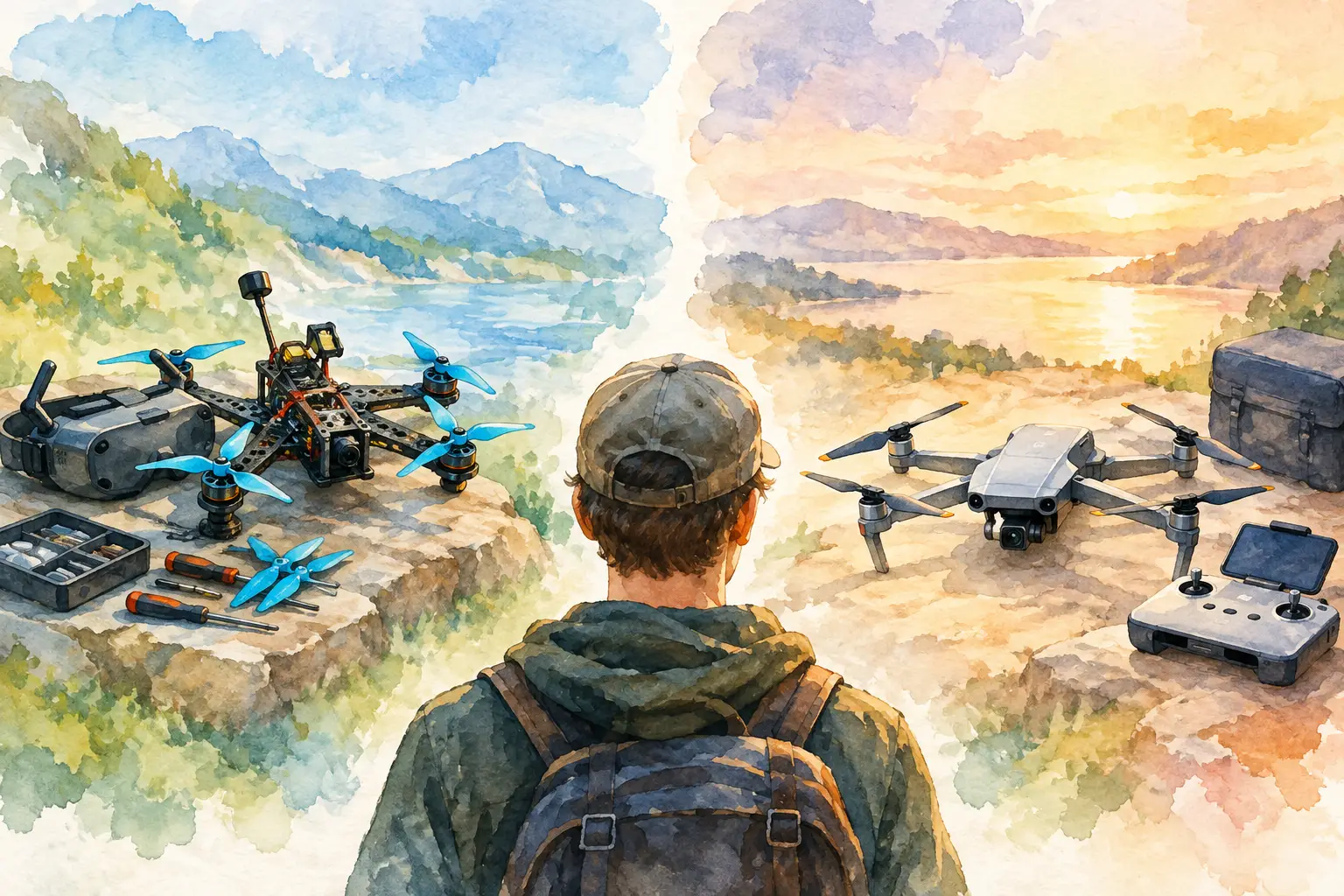
A great first FPV flight should feel exciting, not like an electronics exam. When comparing FPV kits versus RTF drones, the real question is simple: do you want to build and customize your way into the hobby, or open the box, charge up, and start flying?
Both options can deliver the fast, immersive view that makes FPV flying so memorable. But they ask different things from your time, budget, and patience. The better choice is not always the most advanced one. It is the one you will feel confident using often.
What Is the Difference Between FPV Kits and RTF Drones?
An FPV drone lets you see from the aircraft’s point of view through goggles or a screen. Instead of watching a drone from the ground, you get a pilot’s-eye view as it moves through open spaces, turns around trees, and follows a course.
The phrase “FPV kit” can mean a few different things. In some cases, it refers to a build kit with separate parts, such as a frame, motors, flight controller, camera, video transmitter, receiver, batteries, and radio controller. You select or assemble the pieces, then configure the aircraft before flying.
An RTF, or Ready-to-Fly, drone arrives assembled and set up for use. A true RTF package generally includes the drone, controller, and a way to view the video feed, such as goggles. You will still need to charge batteries, read the safety guidance, and learn the controls, but you do not need to solder parts or tune software to get airborne.
Some beginner-friendly FPV packages combine the best parts of both labels. They are sold as FPV kits but function much like RTF drones because the core equipment is matched and ready to use. Always check what is included before buying. “Kit” does not automatically mean “build it yourself.”
FPV Kits Versus RTF Drones: The Best Fit for Your Goals
The choice comes down to how you want to spend your hobby time. If flying is the main event, an RTF drone or complete beginner FPV kit is usually the smarter place to start. If you love understanding how things work, enjoy troubleshooting, and want full control over your setup, a build-focused FPV kit can be deeply rewarding.
Choose an RTF Drone for a Faster First Flight
RTF drones remove the biggest barriers for new pilots. The radio controller is matched to the drone. The video system is designed to work with the included goggles or display. The frame is assembled, and the basic settings are typically already in place.
That simplicity matters more than it may seem. New FPV pilots already have plenty to learn: stick control, throttle management, safe takeoff and landing, orientation, battery care, and local flight rules. Starting with a ready-to-fly setup lets you focus on those skills instead of wondering whether a loose wire is causing a signal problem.
An RTF setup is also a strong choice for gift buyers. It is easier to give someone a complete experience than a box of components that requires extra research before the fun begins. For a first-time pilot, opening one coordinated package feels far more inviting.
A complete brushless FPV quadcopter kit with a dedicated controller and goggles can offer that ready-to-fly feeling while still delivering a more immersive experience than a basic toy drone. Brushless motors are valued for their efficient performance and responsiveness, making them a popular step up for pilots who want smoother, more confident control.
Choose a Build-Focused FPV Kit for Custom Control
Building an FPV drone gives you flexibility that an RTF package cannot always match. You can select a frame size for your preferred flying style, choose motors for power or efficiency, use a video system that fits your budget, and upgrade one piece at a time.
This route appeals to tinkerers. If you like assembling gear, watching setup tutorials, and solving a problem step by step, building is part of the enjoyment. You also gain a clearer understanding of how your drone works, which can make repairs less intimidating later.
There is a practical advantage, too. FPV flying can involve crashes, especially while learning. A custom build is often easier to repair because you know which parts are installed and how they connect. Replacing a motor, propeller, camera, or antenna can be more straightforward than sending away an all-in-one model.
Still, customization comes with a learning curve. You may need tools, spare parts, software, soldering skills, and time to test every system safely. The lowest-priced individual components do not always create the lowest total cost once you add batteries, a charger, goggles, a radio, tools, and backup parts.
Cost Is More Than the Price on the Box
An RTF drone often looks more expensive at first because the package includes the essentials. That can make it better value for a beginner who does not own FPV equipment yet. You are paying for compatibility and convenience, not just the drone itself.
A build kit may have a lower starting price, but it can become a bigger project. Before comparing prices, make sure you know whether each option includes a controller, goggles or monitor, batteries, charger, propellers, and the gear required for assembly.
For either choice, plan for ongoing costs. Batteries eventually wear out. Propellers are designed to be replaced after hard impacts. A carrying case, extra batteries, and a few spare props can make every outing more enjoyable. Buying a setup that fits your real budget leaves room for these useful extras.
Think About Repairs Before Your First Crash
Every FPV pilot crashes eventually. The goal is not to avoid every mistake. It is to learn in a safe open area and keep early mistakes small.
RTF drones are convenient because the components are designed as a package. For common beginner damage, such as a bent propeller, the fix may be quick. However, some compact models use more specialized parts, so it is worth checking replacement availability before you buy.
Built FPV drones usually win on long-term repair flexibility. Their parts are often modular, and pilots can replace just the damaged component. But that advantage only helps if you are comfortable diagnosing the issue and doing the repair work.
If you want simple ownership, choose a package with clear instructions, accessible replacement parts, and support you can count on. If you want a hands-on hobby, a custom build gives you more control over every future repair.
Flight Style Makes a Difference
Not every FPV drone is meant for the same kind of flying. Tiny indoor-friendly models are ideal for practicing gentle control in a suitable space. Lightweight outdoor quads can be fun for relaxed cruising. Faster freestyle models are built for sharp turns, flips, and more aggressive moves, while long-range setups prioritize efficiency and video range.
For a first purchase, avoid choosing only by speed or dramatic product photos. A powerful drone can be exciting, but it also reacts quickly. New pilots often make faster progress with a stable, manageable setup that gives them room to practice throttle control and turns.
Simulator practice can also help. Using a compatible radio controller in an FPV flight simulator lets you build muscle memory without risking props, batteries, or a sudden trip into a bush. It is one of the easiest ways to make your first real flight feel less overwhelming.
Do Not Skip Safety and Rules
FPV flying is thrilling, but it comes with real responsibility. Fly in a clear area away from people, traffic, buildings, and private spaces. Check the weather, inspect the drone before each session, and stop flying if a battery looks damaged or unusually hot.
US drone rules can vary based on drone weight, location, and how you fly. Review current FAA requirements before taking off, including registration and any Remote ID obligations that may apply to your aircraft. Keep visual awareness of your surroundings and use a spotter when appropriate, especially when wearing FPV goggles.
Start low, slow, and far from obstacles. Your goal on day one is not a cinematic gap or a high-speed pass. It is a controlled takeoff, a calm hover, a simple turn, and a safe landing. Those basics build real confidence.
Which One Should You Buy?
Choose an RTF drone or complete FPV package if you want a quick, guided start, are buying a gift, or would rather spend your weekend flying than assembling electronics. A coordinated setup with controller and goggles keeps the shopping decision simple and helps new pilots focus on the experience.
Choose a build-focused FPV kit if customization is part of the fun, you are ready to learn technical skills, and you want a drone that can evolve with your preferences. It takes more effort, but it can become a satisfying long-term hobby.
For most first-time pilots, the easiest route is a complete, beginner-friendly package from a retailer that makes shopping feel clear and low-risk. Elitene.com brings together practical drone options with secure payment, worldwide shipping, easy returns, and friendly support, so you can shop with more confidence.
Start with the setup that makes you want to charge the battery and head outside. The best FPV drone is not the one with the longest specification list. It is the one that gets you practicing, learning, and enjoying every flight.
Leave a Reply