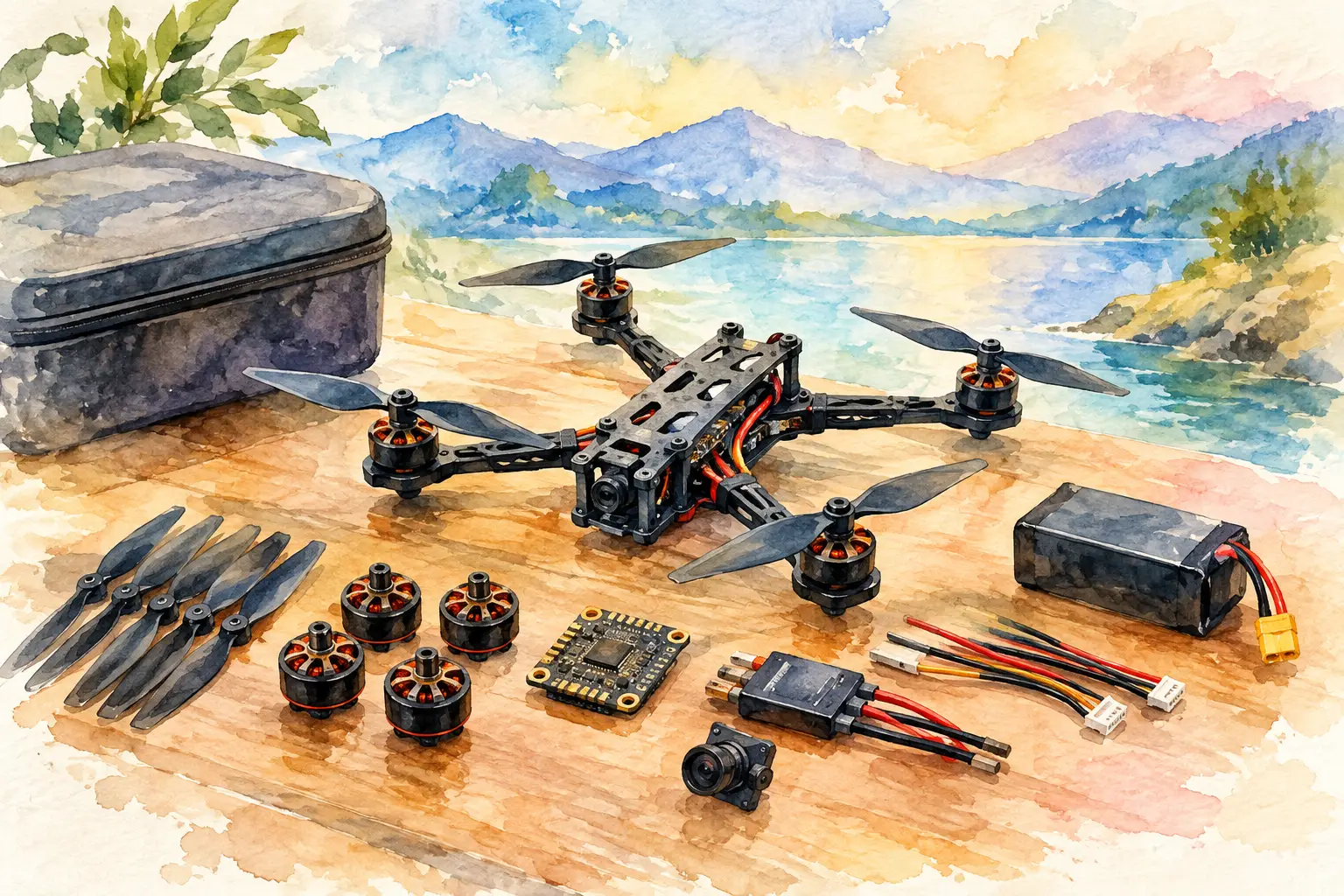
A first FPV flight has a way of making everything else disappear. The ground drops away, a gap between trees becomes a line to hit, and every small stick movement matters. This brushless quadcopter kit review looks at what makes a ready-to-fly FPV package with Lite Radio 3 controls and VR03 goggles such an appealing entry point – and where new pilots should set realistic expectations.
This is a practical review, not a promise that you will be flying cinematic proximity lines on day one. A brushless quadcopter can feel quick, precise, and hugely rewarding, but it also asks for patience. The right kit reduces the barriers: fewer compatibility questions, a controller designed for the aircraft, and goggles that let you experience the flight from the quadcopter’s point of view.
What a Brushless FPV Kit Changes
The word “brushless” matters because the motors are built for responsive, efficient performance. Compared with brushed motors commonly found on very basic toy drones, brushless motors generally deliver stronger thrust, better durability, and a more connected feel in the air. That extra authority helps when the quadcopter needs to recover from a turn, handle a light breeze, or climb out of a mistake.
It also means the learning curve can feel sharper. More power is fun, but it is not automatically easier. New pilots who push the throttle too quickly may find themselves correcting late and overcorrecting again. The best early flights are low, open, and calm. Think of the first few battery packs as practice sessions, not performances.
A kit format is especially useful because FPV gear is an ecosystem. Aircraft, radio transmitter, video goggles, batteries, charging equipment, and settings all need to work together. Buying pieces separately can be a great path for experienced hobbyists, but beginners often benefit from starting with a coordinated package and learning one part at a time.
Brushless Quadcopter Kit Review: The Flight Experience
The real appeal of this high-performance brushless FPV quadcopter kit is immersion. With VR03 goggles, you are not simply watching a drone from the ground. You are seeing the live video feed from its perspective. A slow pass along a path or around a backyard feature suddenly feels more dynamic because your view moves with the aircraft.
The Lite Radio 3 is a welcome match for people who want a straightforward controller rather than a complicated first purchase. A dedicated radio gives you the stick layout FPV pilots use: throttle and yaw on one stick, pitch and roll on the other. It takes repetition to build muscle memory, but starting with a real radio controller helps those skills transfer if you expand your FPV hobby later.
Expect a more active flying experience than you would get from a stabilized camera drone. FPV is about control input, trajectory, and feel. Depending on the flight mode and settings, the quadcopter may hold itself level more readily or allow freer movement. Beginners should begin with the most forgiving available mode, then move up only when takeoffs, turns, and landings feel consistent.
Video goggles add excitement, but they require adjustment too. Fit matters. Position the goggles carefully, set the strap so it is secure without pressure, and take a moment to make sure the screen looks clear. If you wear glasses, check fit and comfort before a longer session. Some pilots prefer to fly in short blocks at first because goggles can feel unfamiliar until your eyes and balance adapt.
Who This Kit Is Best For
This type of package makes the most sense for someone who wants an authentic FPV introduction without assembling a drone from individual components. It suits the curious beginner, the gift buyer shopping for a tech-forward experience, or the hobbyist who wants a compact setup for practicing fundamental flight skills.
It is also a smart pick for shoppers who value convenience. A coordinated kit helps you spend more time learning and less time wondering whether every item is compatible. That does not eliminate setup, charging, or practice, but it makes the route into FPV much clearer.
The fit is less perfect for someone whose main goal is polished aerial photography. FPV video is thrilling, but it is not automatically the same as the smooth, stabilized footage associated with camera-focused drones. It is also not ideal for a buyer who wants zero maintenance. Propellers can be damaged in crashes, batteries need sensible care, and occasional troubleshooting is part of the hobby.
Setup Before the First Takeoff
Good flights start on the ground. Read the included instructions fully before charging or powering on equipment. Confirm the quadcopter, Lite Radio 3, and VR03 goggles are charged as directed, and inspect the propellers for cracks, bends, or loose hardware. Even a small propeller issue can affect handling.
Choose a wide outdoor space away from people, pets, roads, power lines, and obstacles. A calm day gives a new pilot more room to focus on stick control. Check local rules before flying, including any applicable registration, remote identification, airspace, and visual-observer requirements. FPV pilots commonly use a spotter to help maintain awareness of the surrounding area while the pilot wears goggles.
Before putting on the goggles, do a basic control and video check. Make sure you understand how to arm and disarm the quadcopter, and know where the emergency stop or failsafe procedures are described. Keep the aircraft on a clear surface while checking controls. If anything seems unusual – inconsistent video, an odd motor sound, or a damaged propeller – stop and resolve it before flight.
For the first takeoff, resist the urge to fly far away. Hover low, move gently left and right, then land. Repeat. Next, practice shallow turns and simple figure-eight patterns. Your early goal is not speed. It is learning how much input the quadcopter needs and how to bring it back under control smoothly.
The Trade-Offs to Know Before You Buy
A brushless FPV kit offers stronger performance than a toy-grade drone, but that performance comes with responsibility. Crashes are normal, particularly during the first weeks. A low-impact tumble in grass may be nothing more than a lesson. Contact with a hard surface can mean replacing propellers or pausing to inspect the frame and motors.
Battery time is another reality check. FPV flights are often shorter than newcomers expect, especially when flying actively. That is not necessarily a flaw. Short flights encourage focused practice, and many pilots build skills quickly by repeating a single maneuver across several sessions. The practical answer is to plan your day around charging, cooldown time, and safe battery handling rather than expecting one long flight.
There is also the question of comfort with technical learning. You do not need to be an engineer to enjoy FPV, but you should be willing to learn basic terms, follow safety guidance, and troubleshoot carefully. For many people, that is part of the fun. For others, a simpler camera drone may be a better match.
Getting More Value From Your Kit
The fastest way to enjoy a brushless quadcopter is to practice deliberately. Set one small target per session: smoother takeoffs, steady hovering, better turns, or controlled landings. Avoid chasing speed before you can predict the aircraft’s movement. Confidence comes from repetition, not from a single dramatic flight.
A few habits make a noticeable difference:
- Inspect propellers and the frame after every crash.
- Let batteries cool before charging, and follow the manufacturer’s battery instructions.
- Keep a clear landing area and avoid flying around bystanders.
- Use a simulator if available to build stick skills without risking the quadcopter.
- Store the kit in a dry, organized place so goggles, radio, batteries, and spare parts are ready together.
If you are buying this as a gift, consider the recipient’s personality as much as their age. The best match is someone who enjoys learning by doing, has a safe place to practice, and will appreciate the wow factor of FPV goggles. For that person, this is more than another gadget. It is a hobby with a real sense of progress.
Is a Brushless FPV Kit Worth It?
For the right shopper, yes. A brushless quadcopter kit can offer a more serious, more immersive experience than a basic drone while keeping the core equipment in one approachable package. The Lite Radio 3 and VR03 goggles help make the experience feel complete from the start, rather than leaving you to piece together your first FPV setup.
It is worth choosing when you want responsive flight, enjoy hands-on learning, and are prepared to practice safely. It is worth skipping if you only want occasional overhead photos or expect a no-maintenance device. That honest distinction helps you buy for the experience you actually want.
Elitene brings together practical tech and everyday style for shoppers who like trying something new with confidence. When your kit arrives, give yourself room to learn, start low, and let each flight be a little smoother than the last.
Leave a Reply